Stadium Rat
| Favorite team: | LSU  |
| Location: | Metairie |
| Biography: | |
| Interests: | |
| Occupation: | |
| Number of Posts: | 10269 |
| Registered on: | 7/6/2004 |
| Online Status: | Not Online |
Recent Posts
Message
re: Onion Seafood dip
Posted by Stadium Rat on 9/29/26 at 8:36 pm to pjorgeron
What is this?

 0
0
Anybody Have the Recipe for The Caterie's Fried Mushrooms?
Posted by Stadium Rat on 9/29/26 at 7:07 pm
They were easily the best I've ever had.
To me, they tasted like they were coated in Popeye's batter.
Anybody?
To me, they tasted like they were coated in Popeye's batter.
Anybody?
re: Leftover stuffed artichoke stuffing
Posted by Stadium Rat on 9/29/26 at 7:04 pm to Got Blaze
quote:They were the best I ever had, hands down.
I have no clue brother.
re: Leftover stuffed artichoke stuffing
Posted by Stadium Rat on 9/29/26 at 6:54 pm to Got Blaze
quote:Damn. I was just about to see if could ask him for The Caterie's recipe for fried mushrooms.
Billy passed away 4 yrs ago at the age of 55 RIP brother
You wouldn't happen to have it, would you GB?
re: Louisiana Smoked Sausage
Posted by Stadium Rat on 9/25/26 at 8:56 pm to Rougarou12
quote:Always need to note the difference in the factory-made Veron's and the sausage made in the little grocery in Lutcher.
Doesn't start with a B but Veron is worth the drive.
Factory bad.
Lutcher good.
re: Ground beef 'chubs'
Posted by Stadium Rat on 9/23/26 at 8:28 pm to Sams Crow
Zuppardo's this week has 80/20 ground meat for $2.99 a lb - but you have to buy a 10 lb chub. Otherwise, I think it's over $4.50 a lb.
That's a fantastic sale price, so I went today and bought 2.
Just a heads up. Good through Tuesday.
ETA: Clear plastic
That's a fantastic sale price, so I went today and bought 2.
Just a heads up. Good through Tuesday.
ETA: Clear plastic
re: Wild Duck Recipes
Posted by Stadium Rat on 9/23/26 at 4:56 pm to DeepwaterGoMer
Here's all of them:


re: Jambalaya calc ratio question
Posted by Stadium Rat on 9/21/26 at 8:39 pm to pochejp
PocheJP,
I thought you might like to know that the JC is averaging almost a thousand downloads a month in the last 3 years, even 15 years after it started.
Your Jambalaya recipe has been downloaded almost 13 thousand times in the same time period.
I thought you might like to know that the JC is averaging almost a thousand downloads a month in the last 3 years, even 15 years after it started.
Your Jambalaya recipe has been downloaded almost 13 thousand times in the same time period.
re: Jambalaya calc ratio question
Posted by Stadium Rat on 9/20/26 at 8:52 pm to GregMaddux
I think OP's problem is they don't fully understand the difference in ounces of weight versus fluid ounces, aka ounces of volume. For water, they can be used just about interchangeably, but it differs depending on the density of the food.
Rice isn't as dense as water, so it takes more fluid ounces to equal an ounce of weight. About 1.25 fluid ounces of rice to equal an ounce of weight.
A pound of rice can vary between 2.25 and 2.5 cups volume, depending on type of rice and methods of measurement. Short grain rice packs more densely into a 1 cup measure than long grain rice.
If still unconvinced, it's easy enough to buy a 1 pound bag of rice and pour it into cup measures.
Rice isn't as dense as water, so it takes more fluid ounces to equal an ounce of weight. About 1.25 fluid ounces of rice to equal an ounce of weight.
A pound of rice can vary between 2.25 and 2.5 cups volume, depending on type of rice and methods of measurement. Short grain rice packs more densely into a 1 cup measure than long grain rice.
If still unconvinced, it's easy enough to buy a 1 pound bag of rice and pour it into cup measures.
re: Jambalaya calc ratio question
Posted by Stadium Rat on 9/20/26 at 12:10 pm to Flaming Meons
quote:1 pound.
How much does 2.5 cups of rice weigh?
re: Jambalaya calc ratio question
Posted by Stadium Rat on 9/20/26 at 10:26 am to Flaming Meons
quote:These are the same.
“1lb rice OR 2.5 cups”
re: Jambalaya calc ratio question
Posted by Stadium Rat on 9/19/26 at 11:08 pm to Flaming Meons
quote:You're kidding, right? It has always reflected that.
1 pound of rice = 2.5 cups by volume. Weight does not equate to volume.
Jambalaya calculator needs to be updated to reflect this then
re: Jambalaya calc ratio question
Posted by Stadium Rat on 9/19/26 at 7:53 pm to SixthAndBarone
1 pound of rice = 2.5 cups by volume.
Weight does not equate to volume.
Weight does not equate to volume.
re: Corn dogs in Ole Miss stadium..
Posted by Stadium Rat on 9/18/26 at 5:00 pm to Laman1978
quote:It wasn't about Nebraska. It was about Iowa State and Iowa. Here's the original article that was copied:
Do people not realize this came from the way old Big 8 members used to insult Nebraska Cornhusker fans?
The Wombat
The Southern Food & Beverage Museum Has Closed for Good
Posted by Stadium Rat on 9/12/26 at 9:16 am
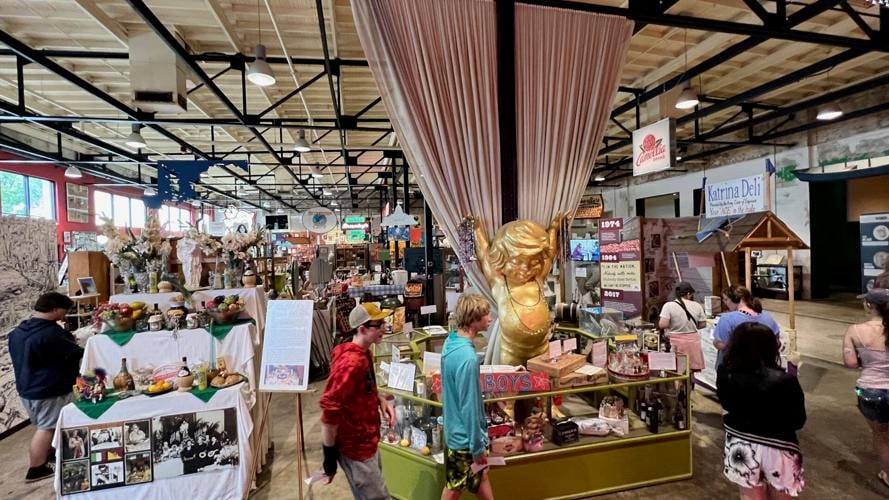
quote:
The Southern Food & Beverage Museum on Oretha Castle Haley Boulevard in Central City has permanently closed its doors, two years after celebrating its 20th anniversary.
A spokesperson for the board of directors of the National Food & Beverage Foundation, which oversees the facility, said Wednesday that the nonprofit institution was unable to overcome financial obstacles created by the pandemic and hurricanes earlier this decade.
NOLA.com
re: Question for board lawyers. Does suing LSU and not Texas hurt the SEC’s case?
Posted by Stadium Rat on 9/3/26 at 12:15 pm to The Baker
The Texas players didn't sign contracts with the NFL teams.

re: Rice/Water ratio for Jambalaya
Posted by Stadium Rat on 8/24/26 at 6:38 pm to GeauxTigers0107

Download here
There have been over 32,000 downloads of the Calculator since Oct 2023.
The Unofficial TD F&D Recipe collection has been downloaded over 20,000 times for part 1, and over 13,000 times for part 2 in the same period of time (Links at the bottom of page one.)
re: Tell me about it “deep water” crawfish please.
Posted by Stadium Rat on 8/22/26 at 6:42 pm to notiger1997
I don't know about "deep water crawfish", but a couple of years ago there was talk about some crustacean similar to a crawfish that would be available in the normal off season. But they were talking about October to January, I think.
re: What are the best ways to make beans less gassy?
Posted by Stadium Rat on 8/20/26 at 5:57 pm to cbree88
There's a Mexican spice called epazote that is supposed to reduce gas. Also, Beano is supposed to work, too.
Discarding the soak water is a must for me because I add salt to the water. It's supposed to help the skins cook at the same rate as the interior of the beans, so you don't wind up with a bunch of blown out skins floating around in the pot.
Discarding the soak water is a must for me because I add salt to the water. It's supposed to help the skins cook at the same rate as the interior of the beans, so you don't wind up with a bunch of blown out skins floating around in the pot.
re: What is a good lasagna recipe?
Posted by Stadium Rat on 8/18/26 at 7:46 pm to prplhze2000
This is the one I like. Sub in some cheddar cheese for some of the mozz if you like.
All American Lasagna
1 lb Ground beef or Italian sausage
1 clove garlic, minced
1 Tbs dried basil
1 1/2 tsp salt
16 oz tomatoes
12 oz tomato paste
10 oz lasagna noodles
2 eggs
3 cups fresh ricotta or cream-style cottage cheese
½ cup grated Parmesan or Romano cheese
2 Tbs parsley flakes
1 tsp salt
1/2 tsp pepper
1 lb mozzarella cheese, sliced very thin
Brown meat slowly; spoon off excess fat. Add garlic, basil, salt, tomatoes, and tomato paste. Simmer uncovered 30 minutes, stirring occasionally.
Cook noodles in large amount boiling salted water till tender, drain, rinse. Beat eggs, add remaining ingredients, except mozzarella.
Layer half the noodles in 13x9x2-inch baking dish, spread with haft the ricotta filling, add half the mozzarella cheese, then half the meat sauce.. Repeat layers. Bake at 375° about 30 minutes (or assemble early and refrigerate; bake 45 minutes). Let stand 10 minutes before serving.
Servings: 8
Source: Better Homes & Gardens’ “All-time Favorite Recipes”
All American Lasagna
1 lb Ground beef or Italian sausage
1 clove garlic, minced
1 Tbs dried basil
1 1/2 tsp salt
16 oz tomatoes
12 oz tomato paste
10 oz lasagna noodles
2 eggs
3 cups fresh ricotta or cream-style cottage cheese
½ cup grated Parmesan or Romano cheese
2 Tbs parsley flakes
1 tsp salt
1/2 tsp pepper
1 lb mozzarella cheese, sliced very thin
Brown meat slowly; spoon off excess fat. Add garlic, basil, salt, tomatoes, and tomato paste. Simmer uncovered 30 minutes, stirring occasionally.
Cook noodles in large amount boiling salted water till tender, drain, rinse. Beat eggs, add remaining ingredients, except mozzarella.
Layer half the noodles in 13x9x2-inch baking dish, spread with haft the ricotta filling, add half the mozzarella cheese, then half the meat sauce.. Repeat layers. Bake at 375° about 30 minutes (or assemble early and refrigerate; bake 45 minutes). Let stand 10 minutes before serving.
Servings: 8
Source: Better Homes & Gardens’ “All-time Favorite Recipes”
re: I Was There When…
Posted by Stadium Rat on 8/16/26 at 7:34 pm to BunkieWrench
Saints -John Gilliam's 1st game opening kickoff return for TD.
Dempsey's kick.
Super Bowls IV and VI.
Ali-Spinks at Superdome
Jack Nicklaus signed a scorecard for me after GNOO.
Larry Bird's career-high 66 points vs Hawks at UNO.
Arkansas-Ole Miss and Archie Manning in Sugar Bowl.
Gov. Ronald Reagan was shaking hands after a campaign speech at the Assembly Center.
LSU - Phantom face mask penalty, LSU v USC, 1979
Saban's 1st game at LSU. (Hot as frick) Sold my game ticket on Ebay to a guy that played for the opponent.
LSU and Saban beating Bama at Bama in 2003 (1st row, 50-yard line seats)
Mike Miley knocked on my front door. (brother was his teammate at EJ when they won District)
LSU-Tulane baseball Super at Zephyr Field
the best reason to go to an LSU baseball game was to get a cheap hot dog and Coke (mid 70s) About 60 people in attendance.
Dempsey's kick.
Super Bowls IV and VI.
Ali-Spinks at Superdome
Jack Nicklaus signed a scorecard for me after GNOO.
Larry Bird's career-high 66 points vs Hawks at UNO.
Arkansas-Ole Miss and Archie Manning in Sugar Bowl.
Gov. Ronald Reagan was shaking hands after a campaign speech at the Assembly Center.
LSU - Phantom face mask penalty, LSU v USC, 1979
Saban's 1st game at LSU. (Hot as frick) Sold my game ticket on Ebay to a guy that played for the opponent.
LSU and Saban beating Bama at Bama in 2003 (1st row, 50-yard line seats)
Mike Miley knocked on my front door. (brother was his teammate at EJ when they won District)
LSU-Tulane baseball Super at Zephyr Field
the best reason to go to an LSU baseball game was to get a cheap hot dog and Coke (mid 70s) About 60 people in attendance.
Popular
 18
18