
Geekboy
| Favorite team: | LSU  |
| Location: | |
| Biography: | |
| Interests: | |
| Occupation: | |
| Number of Posts: | 8639 |
| Registered on: | 1/10/2004 |
| Online Status: | Not Online |
Recent Posts
Message
re: I consider Tucker the most dangerous person on the national stage
Posted by Geekboy on 10/24/26 at 4:10 pm to tShadowTiger
quote:
I mean, for one Tucker is CIA born and raised. He wore the bracelet of the Kabbalah for a long time. He is a part of the dialectic being shaped, as he is intentionally shaping the national conservative movement to oppose the global immigration thing that is being orchestrated by the same entity. That said, Tucker is actually saying the truth within the truths previously controlled dialectic as WW2 was a staged dialectic of its own. Let’s put it this way, JFK once said something along the lines that Hitler would one day be understood instead of misunderstood and revered. There was peace offerings galore. There was the agreement that shipped out ashkanazi’s (Jews) to create the state of Israel before the war started (LOL). Nothing about WW2 strategy makes any sense through the lens of a genuine conflict. Nothing. Churchill bombed his own people, not Germany. Tucker is an agent for the nationalist movement and for this controlled collapse of Israel for the benefit of the coming Roman Catholic era, the same agenda Charlie Kirk was exited from the stage for.


 1
1
quote:
Since that was a long time ago, does he still do that?
Yes, that dumb frick is still doing it.
I consider Tucker the most dangerous person on the national stage
Posted by Geekboy on 10/24/26 at 8:16 am
I would vote for a zombie President like Biden and Kamala Harris, who just barely has a very slightly higher IQ than your garden variety vegetables, before I would vote for this completely deranged dumb frick.
LINK
You cannot possibly be this fricking stupid and have an influential platform.
Even people dumb enough to believe the ravings of this lunatic should be locked up in an asylum.
Think about these quotes from him…..
When Rees-Mogg raised the prospect of Britons speaking German if Hitler had not been opposed, Tucker responded……
German domination is the response of a stupid, mindless, degenerate cocksucker, who imagines Nazi occupation would chiefly have involved changing the street signs.
quote:
Tucker Carlson Questions Britain’s War Against Nazi Germany, Jacob Rees-Mogg Slams Him
LINK
You cannot possibly be this fricking stupid and have an influential platform.
Even people dumb enough to believe the ravings of this lunatic should be locked up in an asylum.
Think about these quotes from him…..
quote:
“I never understood why World War II was fought in the first place.”
When Rees-Mogg raised the prospect of Britons speaking German if Hitler had not been opposed, Tucker responded……
quote:
Who cares
German domination is the response of a stupid, mindless, degenerate cocksucker, who imagines Nazi occupation would chiefly have involved changing the street signs.
Let her come to America and run for President in 2028. Amend the constitution. I’d vote for her in a heartbeat.
Ironically the only European political leader with real balls is a woman
Posted by Geekboy on 10/22/26 at 5:55 pm
Italian Prime Minister Giorgia Meloni. This is some good shite.
Her response has been tougher criminal penalties, financial accountability for destruction, and expanded police and military security operations.
Participating in a violent group of five or more people that endangers public safety can result in 2–5 years in prison and fines up to €20,000.
Organizing or promoting groups for violent demonstrations, including online, can carry 4–12 years in prison.
Parents can be held financially responsible for vandalism committed by their minor children.
New provisions make prosecution of some offenders aged 14–17 easier and extend certain preventive detention powers to minors.
Expanded authority permits arrests after an incident based on qualifying video evidence.
Her response has been tougher criminal penalties, financial accountability for destruction, and expanded police and military security operations.
Participating in a violent group of five or more people that endangers public safety can result in 2–5 years in prison and fines up to €20,000.
Organizing or promoting groups for violent demonstrations, including online, can carry 4–12 years in prison.
Parents can be held financially responsible for vandalism committed by their minor children.
New provisions make prosecution of some offenders aged 14–17 easier and extend certain preventive detention powers to minors.
Expanded authority permits arrests after an incident based on qualifying video evidence.

Best tour guide in Paris right now
Posted by Geekboy on 10/22/26 at 4:05 pm
I’m in!
Yeah, right. LeBron is the greatest of all time.
Posted by Geekboy on 10/22/26 at 8:07 am
LeBron should not even be allowed in the same room that Michael Jordan is in.
The LeBron’s the greatest of all time debate is the single dumbest debate of all time. It’s actually laughable to think he’s even close.
If you think that entitled prick is the greatest, you also think the Earth is flat.
The LeBron’s the greatest of all time debate is the single dumbest debate of all time. It’s actually laughable to think he’s even close.
If you think that entitled prick is the greatest, you also think the Earth is flat.
Ilhan. Word of advice. Go find a wooden boat with a little sail down at the Annapolis harbor, steal it, point it east, and start hoping for some wind.
Kick her arse off the Supreme Court
Posted by Geekboy on 10/22/26 at 7:31 am
quote:
Justice Elena Kagan accuses Supreme Court’s conservative majority of undermining democracy
LINK
Have justices furiously criticized other Supreme Court decisions in the past? Of course they have.
But here is where this Leftist brained diseased idiot has crossed the line.
Her recent criticism, as explained in this article, is significant because she is questioning the broader democratic consequences of the Court's decisions, rather than simply disagreeing with the legal reasoning in one case.
There is an important distinction between two kinds of criticism:
Criticism in a judicial dissent: A normal and essential part of Supreme Court decision-making, even when extremely harsh.
Criticism in public speeches and interviews: Less common, particularly when a sitting justice questions the Court's overall direction, institutional legitimacy, or colleagues' judgment.
This is a typical pouting immature reaction from a Leftist moron. Behaving like a little stubborn child that isn’t getting their way.
These Progressive Leftist idiots worldwide are so fricking tiring. They are literally the reason we have so many constant nonstop problems worldwide.
They are a scourge on society as a whole.
re: The Young Turks will publish a story today about a gay, closeted US Senator (updated)
Posted by Geekboy on 10/22/26 at 7:17 am to Demonbengal
Does Kalshi have a category for this?
Macron is a lying, disgusting, repugnant POS.
Posted by Geekboy on 10/22/26 at 7:15 am
France is over…..because of Macron!!!!!
This dumb bitch made millions fraudulently, correct? And the dumb woke, Marxist, airheads will send her money. Village idiots everywhere.
re: The Bacon Squad called in to help France.
Posted by Geekboy on 10/21/26 at 10:17 am to BoomerandSooner
Maybe it should be B & B. Bacon and bullet. That way they don’t get the virgins in the afterlife. I think I got that right.
VooDude, you should be our Secretary of State, I guess.
Trump off the top rope on Somalia and Ilhan.
Posted by Geekboy on 10/21/26 at 6:21 am
She also started a Go Fund Me campaign.
:rotflmao:
:rotflmao:
Guess who is going to be happy about the midterms?
Posted by Geekboy on 10/20/26 at 7:03 am
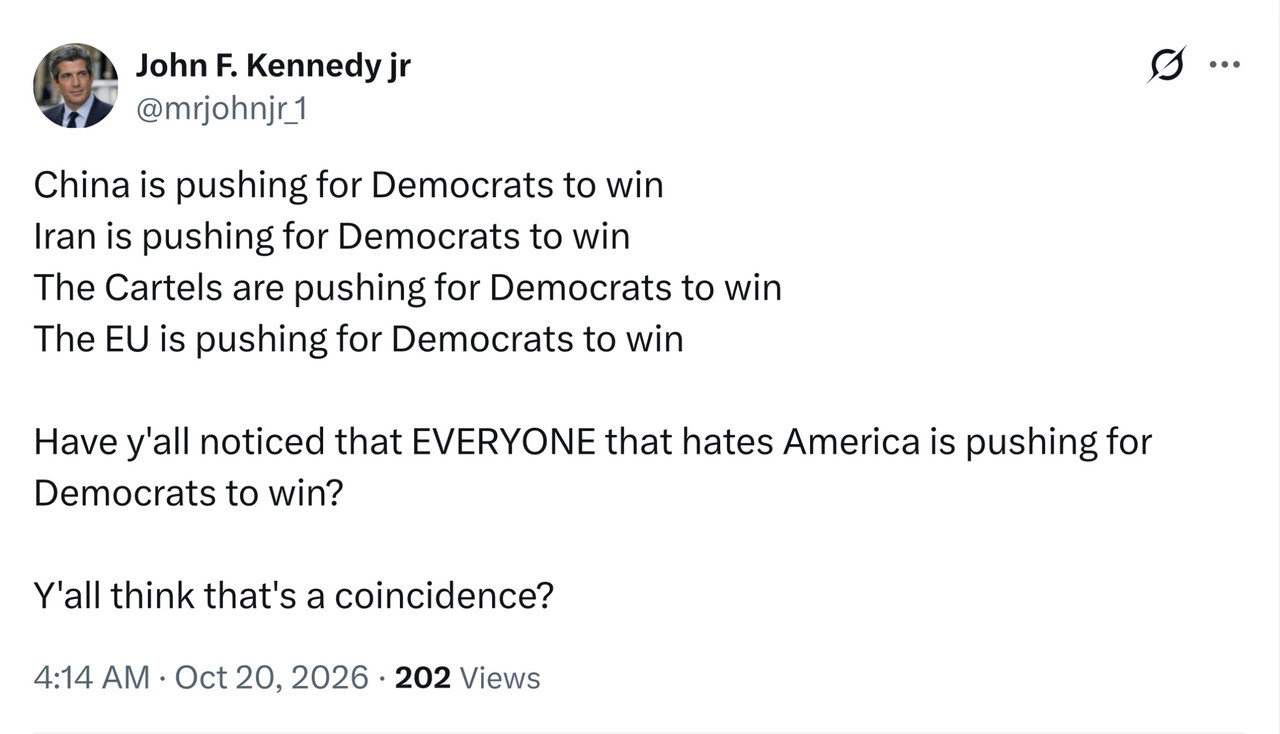
F the WNBA
Posted by Geekboy on 10/20/26 at 6:44 am
quote:
WNBA stars defy fan fury and walk off the court before the national anthem AGAIN ahead of Game 2 of Finals
LINK
Leftists don’t get it until it happens to them
Posted by Geekboy on 10/20/26 at 5:42 am
Typical of these dumb fricks.
Lefty feminist visits a mosque and finds out.
Lefty feminist visits a mosque and finds out.
quote:
That British lion should be replaced with a house cat - maybe a kitten.

This is the cure for the rioters in Europe
Posted by Geekboy on 10/19/26 at 8:14 am
Several of these.

Popular

 19
19