lsudat10
| Favorite team: | LSU  |
| Location: | Lexington, KY |
| Biography: | |
| Interests: | |
| Occupation: | |
| Number of Posts: | 2878 |
| Registered on: | 3/17/2010 |
| Online Status: | Not Online |
Recent Posts
Message
re: The most baffling thing to me is how can reed look
Posted by lsudat10 on 9/27/26 at 9:00 am to nicholastiger
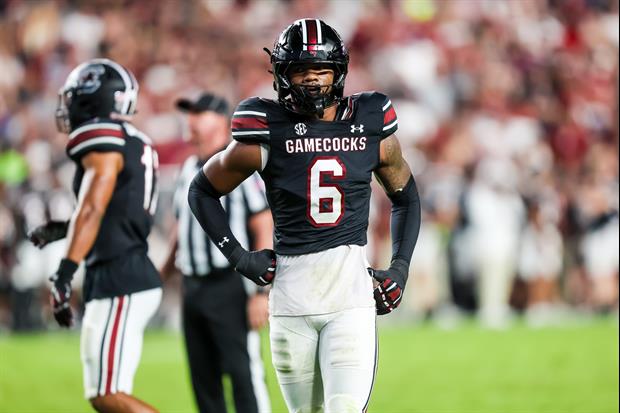
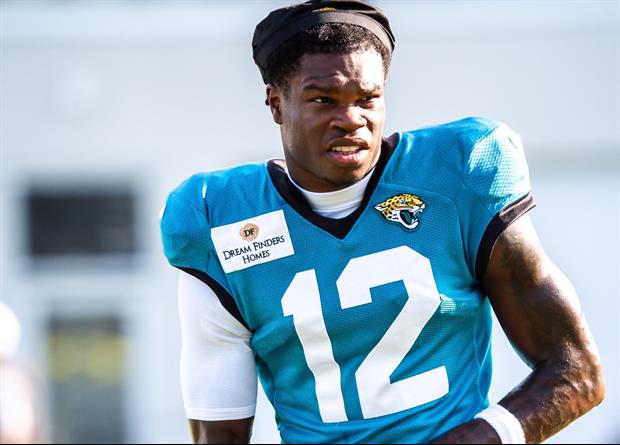
Ehhh, I would hate to see Sam Leavitt without being able to throw to #6 & #4 at wide receiver for LSU.
I know injuries are a part of it, but I give Reed a little slack.
I know injuries are a part of it, but I give Reed a little slack.

 0
0
re: Blonde at the Ole Miss-Florida game
Posted by lsudat10 on 9/27/26 at 6:07 am to Flaming Meons
quote:
Flaming Meons
How long have incels been white knighting on the More Sports Board of tigerdroppings.com?
Flaming Meons trying to stop straight men from looking at attractive women because we might become aroused, have heterosexual intercourse, and reproduce…. and none of that has anything to do with Flaming Meons, so where will his attention come from? Who will care enough to witness the existence of Flaming Meons?!

re: Do you TRULY OWN anything?
Posted by lsudat10 on 9/24/26 at 1:03 pm to kywildcatfanone
quote:
I mean, you do not truly own your house or your cars or any property unless you keep paying the annual property taxes on them, which is a govt scam to pay 25% of the govt work force that we don't need.
You’re correct about homes, but TECHNICALLY you can avoid paying taxes and insurance on your cars by not registering/re-registering your car— you just have to avoid public roads.

re: top 8 quarterbacks in LSU since 2000
Posted by lsudat10 on 9/17/26 at 4:25 pm to AlecRock23
1. Joe Burrow
2. Jayden Daniels
3. Jamarcus Russell
4. Matt Flynn
5. Zach Mettenberger
6. Rohan Davey
7. Matt Mauck
8. G Nuss/R Perrilloux/J Booty/D Etling
2. Jayden Daniels
3. Jamarcus Russell
4. Matt Flynn
5. Zach Mettenberger
6. Rohan Davey
7. Matt Mauck
8. G Nuss/R Perrilloux/J Booty/D Etling
re: finebaum is now irredeemable in my eyes.
Posted by lsudat10 on 9/12/26 at 9:19 am to TheTideMustRoll
quote:
My guy, if you think that the other 15 institutions in the conference just randomly woke up one morning and decided to threaten LSU with expulsion, I've got some beachfront property in Colorado I'd like to sell you. Rather than complaining about how you've been unfairly singled out, maybe you should be asking some hard questions to your leadership about why LSU was ever in that position to begin with.
Mon ami, you seem to be well spoken enough to know what’s going on here. You realize that college sports is currently in shambles. If LSU is pushing the boundaries to force more guardrails on college athletics, than the fans of that school damn sure are going to support it.
Let it be known in history that LSU was the lone institution fighting for a better future once the rest of you start pushing back on the SEC. This was the first domino for change.
re: I cannot wait for CLK to hang 50 on UTK
Posted by lsudat10 on 9/10/26 at 5:31 am to KwoodTiger
I hope LSU puts Jordan Ross in bubble wrap until an hour before kickoff in Knoxville.
I’d prolly do 2 chicks at the same time
ETA sorry wrong board
ETA sorry wrong board
re: wtf Is this trademark?
Posted by lsudat10 on 9/8/26 at 6:52 am to Tigernomics
LSU has been referred to, in some form or fashion, as:
Bayou Bengals
Chinese Bandits (LSU defensive lineman specifically)
Bayou Bandits sounds like something a smaller state school in Louisiana would claim/trademark
Bayou Bengals
Chinese Bandits (LSU defensive lineman specifically)
Bayou Bandits sounds like something a smaller state school in Louisiana would claim/trademark
quote:
You all have cult mentality, you're just blind to your own.
I’m not seeing this.
I see people sometimes laughing at and sometimes cheering for Trump for saying egotistical things he knows will piss off his opponents. I don’t know many Trump voters who aren’t ready for the successor, whoever that may be.
This board has way too many Trump voters who bash and criticize him on the reg for you to justly say they’re in a cult; something democrats are not capable or allowed to criticize the shite-tastic state of their own party nor their morally bankrupt elected public servants. For this reason alone, democrat voters are spineless cult members.
Also the Democrats identity is now forever tied to transgenders and playing along with their mental illnesses. Sick bunch of losers.
re: What is your favorite saying?
Posted by lsudat10 on 9/2/26 at 10:54 am to LSU Coyote
Early to bed, early to rise, work like hell… and advertise.
re: My auto insurance is $615.00 a month and State Farm gave me $113.65 dividend.
Posted by lsudat10 on 9/1/26 at 8:43 pm to DiamondDog
Sounds like you’re upset about paying a small fortune each month for insurance, but your posts are taking it out on free money. Peculiar.
Unsolicited advice: Don’t allow insurance to be a burden on you; you’ll understand it today and it’ll change tomorrow. Make sure you’re paying the least amount for as much coverage as you need. There are so many options.
People who try to think insurance in simple terms of how it’s “supposed” to benefit them end up having their expectations obliterated, they go crazy, and call it a scam, only to find themselves in worse shape than if they would have done some legit research (or call an EXPERIENCED & REPUTABLE insurance agent, TAKE THEIR ADVICE and move on with your life
I DiDnT hAvE cLaiMs WhY iSnT it FrEe?!?!
Dumbasses, the general public
Unsolicited advice: Don’t allow insurance to be a burden on you; you’ll understand it today and it’ll change tomorrow. Make sure you’re paying the least amount for as much coverage as you need. There are so many options.
People who try to think insurance in simple terms of how it’s “supposed” to benefit them end up having their expectations obliterated, they go crazy, and call it a scam, only to find themselves in worse shape than if they would have done some legit research (or call an EXPERIENCED & REPUTABLE insurance agent, TAKE THEIR ADVICE and move on with your life
I DiDnT hAvE cLaiMs WhY iSnT it FrEe?!?!
Dumbasses, the general public
quote:
You lost me right there. The Senate is one of the houses of Congress. There is no such thing as “the Senate and Congress”.
Corrected my mistake
Nick Saban conspiracy theory
Posted by lsudat10 on 8/31/26 at 5:51 am
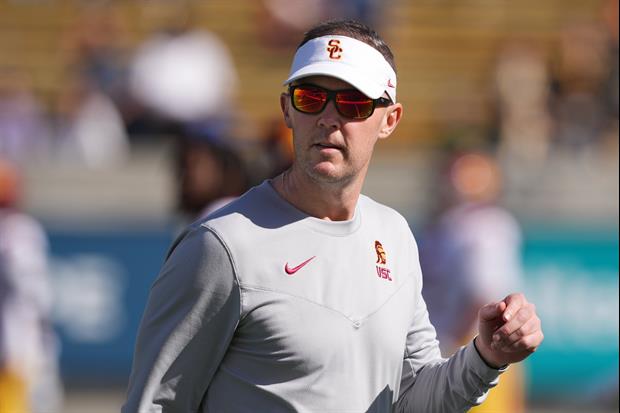
I believe that Saban is helping Lane behind the scenes. Knowing their relationship, it would make a lot of sense to me if Saban was helping Kiffin exploit loopholes in the rules.
Reason 1: Saban is bitter about the current state of college football(rightfully so), and he has been ever since he retired because the changes to the game and the NCAA lost its power. Saban felt he had a bigger calling than coaching at Alabama at that point.
Reason 2: highlights from 2024 & 2026 Reels of Saban testifying in front of the Congress. Where is real progress to be made that Saban wants? The answer is “real life scenarios” where the lack of rules are exposed, and the outcomes negatively impact people and other universities; forcing a solution made.
The only evidence I have is when I listened to Kiffin on a podcast recently, acknowledging that he is currently the villain in sports, he compared himself to hulk Hogan: straddling the line between hero and villain. He wouldn’t say that if he didn’t have bigger plans.
The other thing is, I don’t think Kiffin is the brains behind this, even though IF this outcome ends up benefiting college football with regulation, he will be the one to get credit for it; not Nick Saban, who I believe is pulling these strings.
Let’s see how defensive Saban is of Kiffin on Saturday morning.
Reason 1: Saban is bitter about the current state of college football(rightfully so), and he has been ever since he retired because the changes to the game and the NCAA lost its power. Saban felt he had a bigger calling than coaching at Alabama at that point.
Reason 2: highlights from 2024 & 2026 Reels of Saban testifying in front of the Congress. Where is real progress to be made that Saban wants? The answer is “real life scenarios” where the lack of rules are exposed, and the outcomes negatively impact people and other universities; forcing a solution made.
The only evidence I have is when I listened to Kiffin on a podcast recently, acknowledging that he is currently the villain in sports, he compared himself to hulk Hogan: straddling the line between hero and villain. He wouldn’t say that if he didn’t have bigger plans.
The other thing is, I don’t think Kiffin is the brains behind this, even though IF this outcome ends up benefiting college football with regulation, he will be the one to get credit for it; not Nick Saban, who I believe is pulling these strings.
Let’s see how defensive Saban is of Kiffin on Saturday morning.
re: Its 2:38 am on a random day in August 2002 and you just woke up on your couch
Posted by lsudat10 on 8/29/26 at 3:30 am to TheHarahanian
quote:
Is there any sensation that vanished faster and more completely than Enya?
She lives alone in a castle in Ireland
re: Let’s stand up for Sophie
Posted by lsudat10 on 8/29/26 at 1:40 am to Keltic Tiger
Caitlin is owned by State Farm so will likely never be political while she’s in that relationship
re: Major disaster at China-Nepal border. 54 Americans missing
Posted by lsudat10 on 8/26/26 at 5:36 pm to Floating Change Up
quote:
If chicken had an ounce of humanity or integrity, you really would be perma-banned.
Replies like this to el gaucho are why chicken keeps him around :lol:
re: In case you missed this- (excellent hype vid)
Posted by lsudat10 on 8/25/26 at 5:33 am to Swamp Angel
That video has a place in the best LSU Football hype edits of all time
YouTube TV with 4K cancel after Super Bowl
IDK I’d need to see some more evidence before jumping to any conclusions
re: Jalen Brewster transferring to Buford, GA
Posted by lsudat10 on 8/23/26 at 2:51 am to FriscoTiger
quote:
All about the dollars with this kid!!!
Imagine that! Living in a capitalist society where people must have dollars to survive. The audacity a kid has putting himself in a position to maximize his earnings while the iron is hot. Unconscionable decision making.
The Weather Channel app at 3 pm today said 99% chance of rain at 5 pm and it was just dry and blazing hot. Not a single drop. (Lexington, KY).
Popular
 45
45