TorchtheFlyingTiger
| Favorite team: | North Carolina St.  |
| Location: | 1st coast |
| Biography: | |
| Interests: | LSU & NC St sports, travel, finance |
| Occupation: | FIRE'd |
| Number of Posts: | 3376 |
| Registered on: | 1/14/2008 |
| Online Status: | Not Online |
Recent Posts
Message
re: 45 Years of age, at what level would you stop saving for retirement?
Posted by TorchtheFlyingTiger on 9/11/26 at 1:23 am to Big Scrub TX
quote:
IMO, you shouldn't think about "retiring early" until you have at least $10M in net worth
Sure Suze. Even with inflation, that's gonna buy a lot of jackets.


 0
0
re: Looking for some advice (Investing)
Posted by TorchtheFlyingTiger on 9/10/26 at 2:35 pm to 03 West CoChamps
quote:How do you plan to fund the down payment? Set some extra savings aside. First year in a house is inevitably going to be more expensive than you expected. Plus, with a mortgage and home to maintain you're gonna want a bigger emergency fund.
Were finishing our lease before buying a house. Don't really want to cut into this inheritance to use towards the house.
re: Looking for some advice (Investing)
Posted by TorchtheFlyingTiger on 9/10/26 at 2:30 pm to 03 West CoChamps
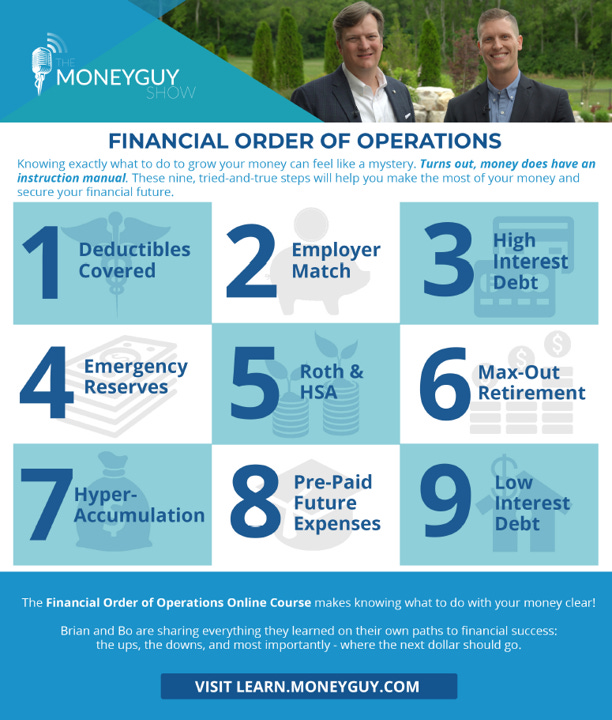
Follow the FOO (Financial Order of Operations)
re: 45 Years of age, at what level would you stop saving for retirement?
Posted by TorchtheFlyingTiger on 9/9/26 at 4:22 am to Billy Blanks
Early retirement has been best thing ever for my health. It's those that retire when old and/or already unhealthy that tend to drift further into bad habits and sedentary lifestyle precipitating a rapid decline.
re: Internet mob mentality, the Florida Cake-pop fiasco
Posted by TorchtheFlyingTiger on 9/1/26 at 11:56 am to Napoleon
You think it's stupid this went viral yet shared it with all of us on OT?
I live in FL, first I've heard of it.
I live in FL, first I've heard of it.
re: Tell me your west nile stories
Posted by TorchtheFlyingTiger on 8/31/26 at 7:42 pm to HonkyRed
FIL got it and died within a week or two. Also had pre existing conditions that presumably made him more susceptible.
re: Random Office Conversation - Servicing vs. Paying Off $150k non-housing debt
Posted by TorchtheFlyingTiger on 8/30/26 at 4:47 pm to CapitalTiger
Let me guess, these idiots around the table didn't bother doing the math on the tax and penalty.
At they're already in 22% bracket and another $130k would spill into 24%
So, tax and penalty on a $130k withdrawal would be 22-24% federal plus 10% penalty and state tax if applicable. That's between $28-$31k tax plus $13k penalty and state tax. So $41k+ for peace of mind and to net less than $90k leaving $60k of debt.
Drives me nuts because the loudest morons are always the most confident ones offering workplace financial advice. I have a relative that took a 401k loan to pay off a truck in his 20s because the loudmouths persuaded him and he didn't follow my advice.
At they're already in 22% bracket and another $130k would spill into 24%
So, tax and penalty on a $130k withdrawal would be 22-24% federal plus 10% penalty and state tax if applicable. That's between $28-$31k tax plus $13k penalty and state tax. So $41k+ for peace of mind and to net less than $90k leaving $60k of debt.
Drives me nuts because the loudest morons are always the most confident ones offering workplace financial advice. I have a relative that took a 401k loan to pay off a truck in his 20s because the loudmouths persuaded him and he didn't follow my advice.
re: Random Office Conversation - Servicing vs. Paying Off $150k non-housing debt
Posted by TorchtheFlyingTiger on 8/30/26 at 4:35 pm to CapitalTiger
A middle ground option, instead of taking an immediate disbursement during rollover: rollover 401k to IRA (not new employer's 401k plan) but leave it untouched for now.
That way, it is there just in case for "peace of mind" just in case all else fails and they still want to tap it and pay taxes plus penalty. This gives them time to calm down, weather the storm and hopefully adjust budget to new income reality.
An astonishingly large # of people erroneously believe splitting assets into multiple accounts reduces compounding. So be prepared to get push back and explain the commutative property of multiplication.
That way, it is there just in case for "peace of mind" just in case all else fails and they still want to tap it and pay taxes plus penalty. This gives them time to calm down, weather the storm and hopefully adjust budget to new income reality.
An astonishingly large # of people erroneously believe splitting assets into multiple accounts reduces compounding. So be prepared to get push back and explain the commutative property of multiplication.
re: Roth Conversion Revelation
Posted by TorchtheFlyingTiger on 8/29/26 at 6:42 pm to DTRooster
I want to convert filling 22% and perhaps 24% bracket but keep getting hung up on the idea of paying LTCG at 15% to free up cash to pay for the taxes. It's probably.the right move to avoid widow penalty, IRMAA and higher bracket RMDs later. I'm finding it hard to justify paying 15% LTCG though when I could pass to widow or heirs with stepped up basis and they pay zero.
This also leads me to realize I will have a difficult time spending Roth eventually and losing the tax free growth so maybe I should work on using my $ instead of tax optimization.
This also leads me to realize I will have a difficult time spending Roth eventually and losing the tax free growth so maybe I should work on using my $ instead of tax optimization.
re: Random Office Conversation - Servicing vs. Paying Off $150k non-housing debt
Posted by TorchtheFlyingTiger on 8/29/26 at 11:28 am to CapitalTiger
Sell and downgrade vehicles to start.
Maybe a 401k loan but almost never early withdrawal during accumulation phase.
Point out 401k and IRAs have protections against bankruptcy and creditors. So even in a worst case situation where they default they're probably better off having held onto their retirement funds just walk away with wrecked credit.
Maybe a 401k loan but almost never early withdrawal during accumulation phase.
Point out 401k and IRAs have protections against bankruptcy and creditors. So even in a worst case situation where they default they're probably better off having held onto their retirement funds just walk away with wrecked credit.
re: Recommended asset allocation for those entering retirement
Posted by TorchtheFlyingTiger on 8/27/26 at 10:59 am to Grinder
4 yrs into early retirement and I'm still 100% equities.
I wouldnt recommend that for everyone. Fortunately, we live well but spend pretty modestly and I cover expenses with pension. I figure the pension substitutes for the conservative portion of a retirement portfolio. There's truly no one size fits all approach.
I wouldnt recommend that for everyone. Fortunately, we live well but spend pretty modestly and I cover expenses with pension. I figure the pension substitutes for the conservative portion of a retirement portfolio. There's truly no one size fits all approach.
re: Looking to get Home Improvement Loan
Posted by TorchtheFlyingTiger on 8/23/26 at 6:39 pm to meansonny
What rate you get w Regions? They're advertised rate is "3.99% introductory annual percentage rate (APR) for the first six billing cycles from account opening. After that, a variable rate applies. Currently, post introductory rates range from 7.50% to 14.375% APR"
re: Looking to get Home Improvement Loan
Posted by TorchtheFlyingTiger on 8/23/26 at 3:53 pm to Amblin
If you have adequate investments in taxable brokerage a SBLOC, Securities Backed Line of Credit. I've found terms were better and may not even have to make payments if so desired. Just got to be conservative and not borrow so much you have to worry about a maintenance call on your investments.
re: How to convince someone to enjoy more of their retirement money?
Posted by TorchtheFlyingTiger on 8/22/26 at 7:32 pm to Everyday Is Saturday
quote:Does FIL know this? Many tax averse folks either don't fully understand marginal vs effective and/or assume waiting longer to pay the tax man is always preferred.
Their effective tax rate today is 20+% lower than our anticipated marginal tax rate.
Perhaps they'd be more eager to spend now if you laid out the increased tax and IRMAA due to widow penalty once one of them dies and the higher marginal rate their daughter will pay on tax differed assets.
re: Car warranty question
Posted by TorchtheFlyingTiger on 8/21/26 at 1:36 pm to Louie11
I've never bought extended warranties.
If I couldn't self insure through any repair I wouldn't buy the car.
I listen to Clark Howard a lot and he often mentions how many consumer complaints he hears about warranty companies not paying out or being unresponsive. Only one's I'd ever consider are form manufacturer not a third party ever.
If I couldn't self insure through any repair I wouldn't buy the car.
I listen to Clark Howard a lot and he often mentions how many consumer complaints he hears about warranty companies not paying out or being unresponsive. Only one's I'd ever consider are form manufacturer not a third party ever.

re: Retirement apps?
Posted by TorchtheFlyingTiger on 8/21/26 at 1:23 pm to lsu xman
What are you trying to get this app to do?
Plenty of free online calculators offered by brokerages, etc to see.if.you are.on track.
FIRECALC is useful https://www.firecalc.com/
Boldin has a free tier. I recently paid for access to their Roth conversion tools. Small price to pay for another perspective ($144/yr) It allows me to run various scenarios but still got to apply.my own good judgement and educated guesswork for assumptions to choose.
Plenty of free online calculators offered by brokerages, etc to see.if.you are.on track.
FIRECALC is useful https://www.firecalc.com/
Boldin has a free tier. I recently paid for access to their Roth conversion tools. Small price to pay for another perspective ($144/yr) It allows me to run various scenarios but still got to apply.my own good judgement and educated guesswork for assumptions to choose.
re: Recently came into some money - Schwab joint brokerage account?
Posted by TorchtheFlyingTiger on 8/20/26 at 10:25 am to baldona
Can a case be made for putting assets in joint account for creditor or lawsuit protection? I was recently advised by estate attorney to retitle our individual brokerages to joint for this reason. Something about Tenancy By Entirety (TBE) accounts protecting assets if one spouse was subject to creditors or lawsuit. Apparently it's state dependent. Also, wouldn't widow get added benefit of a 50% step up in basis at death of 1st spouse?
I assume doing so would make them marital assets though and lose protection as inherited individual assets.
I assume doing so would make them marital assets though and lose protection as inherited individual assets.
re: Level 3 options fidelity
Posted by TorchtheFlyingTiger on 8/20/26 at 8:48 am to racknreel
Can't just ACATS transfer shares from Fidelity to Schwab? Are you in Fidelity zero funds? That's their drawback, can't be moved from Fidelity.
re: Recently came into some money - Schwab joint brokerage account?
Posted by TorchtheFlyingTiger on 8/19/26 at 4:50 pm to 3D
Before buying dividend funds make sure you understand the tax implications in a taxable brokerage.
This dude is apparently new to investing and many of you are suggesting picking individual stocks, that's terrible advice for a newbie!
This dude is apparently new to investing and many of you are suggesting picking individual stocks, that's terrible advice for a newbie!
re: Recently came into some money - Schwab joint brokerage account?
Posted by TorchtheFlyingTiger on 8/19/26 at 3:43 pm to The Hamburglar
Are you maxing ,Roth IRAs? If eligible I'd probably start there. Then max your other tax advantaged retirement accounts (401k, 4013b etc). IPay off and high interest debts first.
Stick to low expense ratio index funds.
Is.this long term money or planning to spend it next few years?
Stick to low expense ratio index funds.
Is.this long term money or planning to spend it next few years?
re: How to convince someone to enjoy more of their retirement money?
Posted by TorchtheFlyingTiger on 8/18/26 at 3:23 pm to Everyday Is Saturday
I'm working on convincing my mother to spend her's. Finally got her to buy a home (she's intended to relocate for past 2 years since retiring). I just try to show her in different ways how much excess she has. Hopefully, she will start being a bit less frugal.
I really need to follow my own advice and lead by example. Been living on pension only since early retiring 4 yrs ago. Realizing tax optimization isnt doing me any good if I dont spend my $.
I really need to follow my own advice and lead by example. Been living on pension only since early retiring 4 yrs ago. Realizing tax optimization isnt doing me any good if I dont spend my $.
Popular

 13
13